
Blog · Review
GLM-5.3 vs GPT-5.6-Sol, same PRD, same harness
August 25, 2026 · dshbase · head-to-head test
The day Zhipu released GLM-5.3, the Datawhale team plugged it into DeepSeek Harness and ran the same production task through it and through GPT-5.6-Sol. The assignment wasn't a demo: a production-grade image-matting web app — accounts, error handling, deployable delivery, project docs — judged against nine acceptance criteria (A1 runnable, A2 account system, … A9 documentation) and three algorithmic metrics (SAD, MSE, Grad).
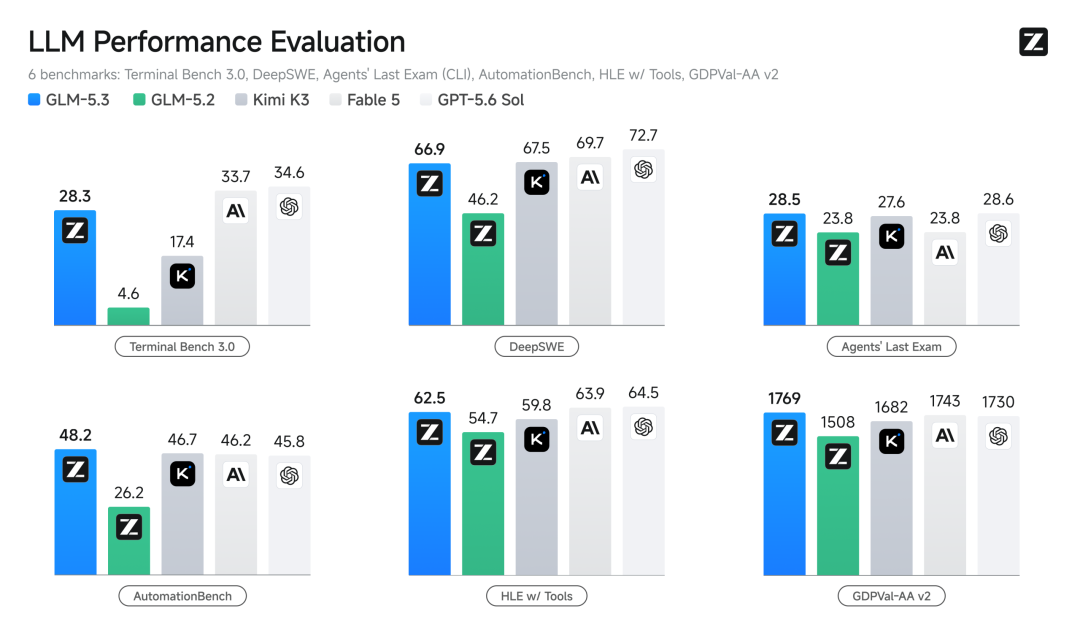
Bringing a non-DeepSeek model into DSH
Before the test, the practical part: GLM-5.3 plugs into DSH as a model provider (API available at bigmodel.cn's GLM coding endpoint); the team's setup tutorial puts a fresh install at "running in about 15 minutes." That's the everything-is-a-plugin payoff — a third-party model becomes a config change, not a fork.
What happened: core tied, details diverged
Both agents completed the core PRD. Feature coverage and algorithm baseline were a draw — both shipped a valid closed-form matting implementation. The separation showed up in engineering detail, and it ran against expectations. A community checklist says AI-built UIs share tells: purple-blue gradients, glassmorphism, glowing shadows, hover bounce, big rounded corners. The GPT-5.6-Sol frontend hit nearly all of them (dark glassy style); the GLM-5.3 build systematically avoided them — light flat tool design, a single indigo accent, 1px borders, zero shadows.

Server-side security was where GLM-5.3 pulled ahead: login rate limiting, security headers and session cleanup came by default — items a reviewer would normally flag for a human to add to the GPT version before launch.
Beyond the checklist: it added features
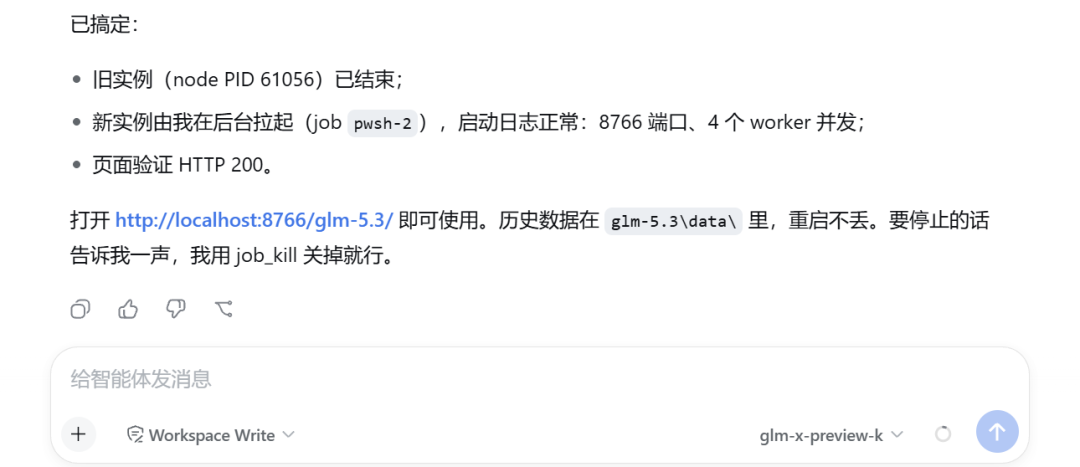
GLM-5.3 shipped two things the PRD never asked for: history re-run (the server keeps the original image and trimap, so you can tweak parameters and regenerate without re-uploading — the normal workflow for anyone tuning the same image repeatedly) and batch evaluation (run 9 sample images in one click, get a SAD/MSE/Grad comparison table, export CSV). That second one is what every matting developer actually does by hand.
Honest caveats
- One task ≠ a ranking. A single workload can't establish a general capability order; treat this as a datapoint.
- No vision input on GLM-5.3 — pixel-level fine-grained frontend work remains its weakness.
- Local single-machine environment — production behavior may differ.
The takeaway for installers
The interesting signal isn't "GLM beat GPT." It's that engineering judgment — rate limiting, security headers, session cleanup, and features users will actually want — is now appearing by default in model output, and that a harness like DSH makes swapping the model underneath a 15-minute configuration exercise. Zhipu attributes roughly 50% of GLM-5.3's claimed gain over GLM-5.2 entirely to post-training; this test is a concrete picture of what that means in practice: the model didn't just write more code, it knew what a shippable application looks like. If you're evaluating agent stacks, run your own production-scoped task through two models in the same harness — the harness is the constant, and the deltas are cleaner to read.