
Plugin directory / Developer / dsh-mcp-admin
dsh-mcp-admin
Verified · install-tested on dsh kairoz9
What it does
View MCP server status (/mcp) and manage MCP servers per profile from the settings page.
Works — verified, early-stage project
View MCP server status (/mcp) and manage MCP servers per profile from the settings page. It installs cleanly and boots without issues in our testing. It's early-stage but functional.
“Verified” means our automated CI actually ran dsh plugin add in a clean profile and it booted — nothing more. Feature descriptions and version compatibility are the author’s claims. This is not a security audit and not an endorsement of third-party code.
README
dsh-mcp-admin
English | 简体中文
A dsh (DeepSeek Harness) plugin: Inspect MCP status (/mcp command) + Manage MCP servers in Settings (add / edit / delete / enable / disable, written back to cordis.patch.yml). MIT licensed.
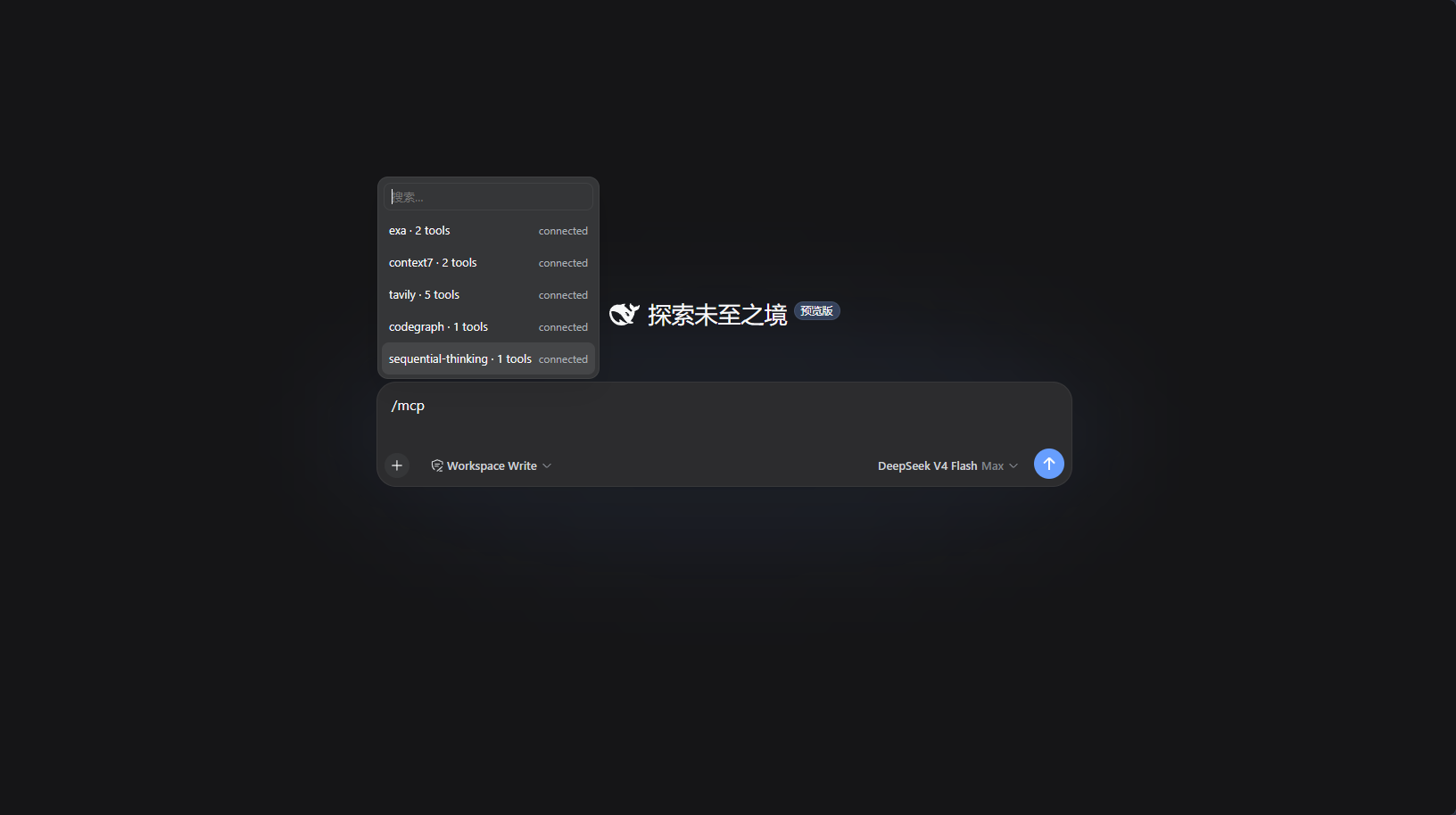
/mcp command output:
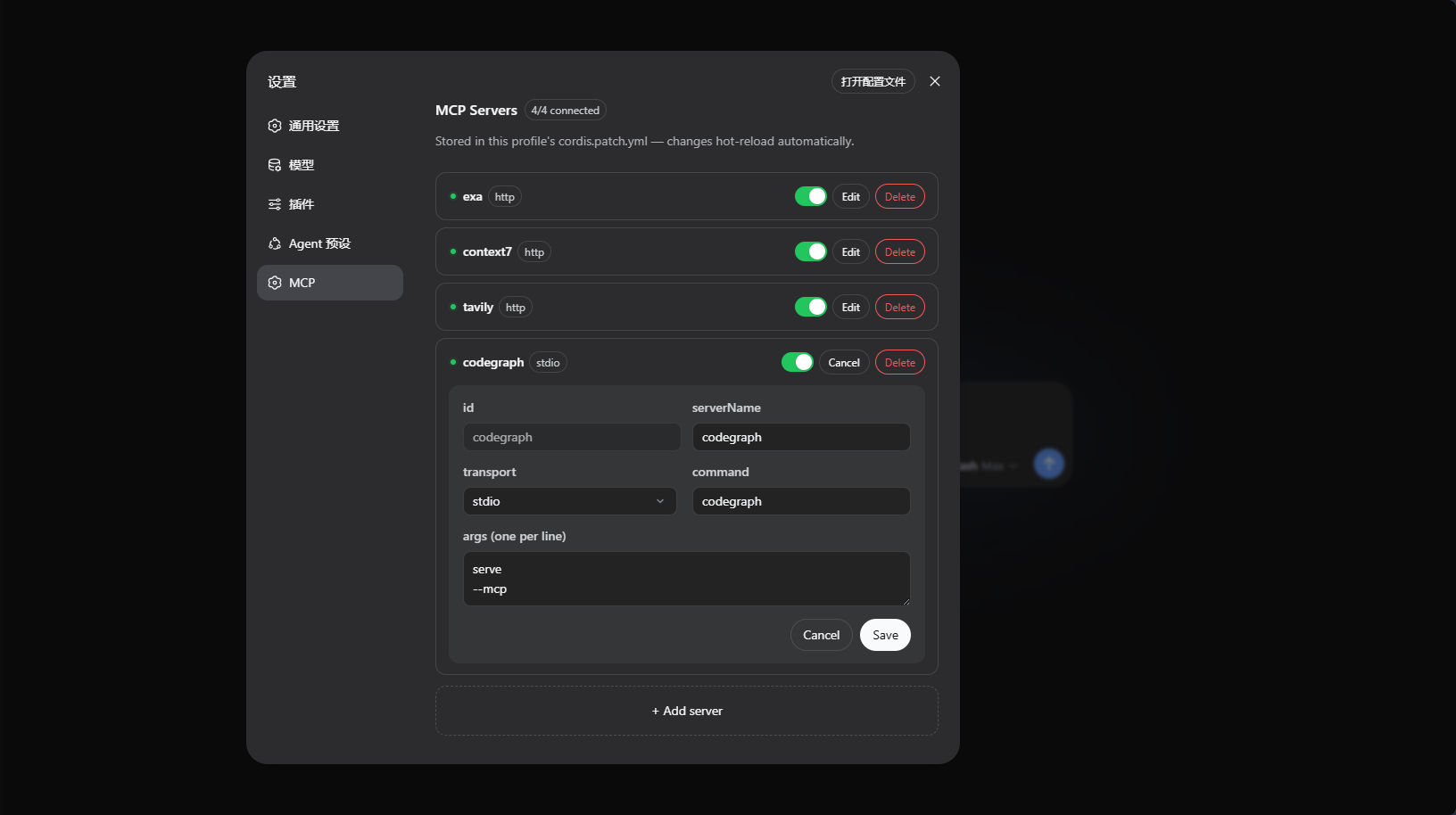
Settings page "MCP" panel:
Installation
Release tarball (Recommended, no build required): Download dsh-mcp-admin-<version>.tgz from Releases, then run:
dsh plugin --profile web add ./dsh-mcp-admin-0.2.0.tgz
Build tarball locally (if building yourself):
pnpm run build        # Builds to lib/
pnpm pack             # Packages into tarball
dsh plugin --profile web add ./dsh-mcp-admin-0.2.0.tgz
Git repository (installs from source via prepare build):
dsh plugin --profile web add github:kairoz9/dsh-mcp-admin
pnpm ≥10 refuses to run the
preparescript of git dependencies by default, which causes the initial Git installation to fail. dsh will print the fix in the error message: add the package key to that profile'spnpm-workspace.yamland re-runadd:allowBuilds: dsh-mcp-admin: trueIt is recommended to pin a commit or tag:
github:kairoz9/dsh-mcp-admin#v0.2.0.
Usage
/mcp— Lists MCP servers across all profiles + live tool count (including never-connected servers, read from full config inventory).- Settings page "MCP" panel — Manage MCP servers per profile: add / edit / disable / enable / delete, with status dots auto-refreshing every second. Saving writes back to that profile's
cordis.patch.yml, and dsh automatically hot-reloads (HMR).
How It Works
Host-side McpAdminRemote (TypertRemoteService, @Remote methods) is auto-discovered by the host gateway. The browser client self-mounts this namespace via ctx.remote.$mount, and both the panel and /mcp popup read the same structured data:
list()— Reads the full server inventory from the profile'scordis.patch.yml, then filtersmcp__prefix withctx.tools.schemas()to annotate real-time tool counts; enumerates activemcp-clientinstances from Cordis registry to distinguish "connected / instance present with 0 tools (connection failed) / not loaded".set()— Reconciles and writes back tocordis.patch.yml(single atomic write, comments preserved), and dsh'swatchUserPatchesHMR automatically reloadsmcp-client./mcpcommand reads all profiles and outputs the tool list for each server.
Install
Install the catalog once, then DeepSeek Harness can find and install any plugin from this site automatically:
dsh plugin add dshbase-catalogThen say "install dsh-mcp-admin for me" — your agent finds it in the directory and installs it. Docs: dshbase-catalog · verified packs.
This plugin is GitHub source (not published to npm) — install it straight from the repo:
Web profile:
dsh plugin --profile web add github:kairoz9/dsh-mcp-adminHeadless (CLI) profile:
dsh plugin --profile headless add github:kairoz9/dsh-mcp-adminTest report
Verified: L1 install + L2 load + L3 runtime from GitHub source on dsh 0.1.0-rc.6.
When to use it
Extend the agent's coding surface — give it a new tool, workflow, or integration so it handles a dev task it couldn't before.
Who it's for
Developers who want dsh to behave like a teammate on real codebases — editing, running, and verifying changes rather than just answering.
For developers — extending it
The tool/command surface is the seam: expose more of the SDK, add smarter context wiring, or tighten the loop between code changes and verification.
Share this badge
Drop this badge into your README — it links back here and updates automatically when our test status changes:

[](https://dshbase.com/plugins/dsh-mcp-admin/)<a href="https://dshbase.com/plugins/dsh-mcp-admin/"><img src="https://dshbase.com/badges/dsh-mcp-admin.svg" alt="dshbase install-tested"></a>